24 February 2012

Hillside Planting (Retaining Wall Alternative)

This house is located on the corner of a city block in Saint Paul. The homeowners had to remove the original retaining wall because it was falling apart. The homeowners found that the cost to rebuild the retaining walls would have been very expensive. Instead they decided to use native plantings to stabilize the hillside on two-sides of their lot. The west side is partially to mostly shaded from street trees. The south side (the long side) is half partially shaded all day and the other half is in full sun for most of the day. To compound the challenge, the soils are sandy fill soils with some compost material. This is how I met the challenge.

I used Minnesota native woodland plants in the shaded areas and native prairie plant species in the sun. The planted areas in the shade didn't fill in nicely until last year (5 years after original planting). The sandy soils slowed down the root establishment of the plants. The homeowners even used drip-irrigation to help sustain the plants during a longer than usual establishment time. New plants usually root into soils well after 2 or 3 growing seasons.

In stark comparison, the native prairie plants adapted very well to the sandy soils within 2 growing seasons. Some Prairie Dropseed Grass (Sporobolus heterolepis) was added to ensure that there was good coverage of the ground. Roots of prairie grasses run 4ft. -5ft. deep or more.


Over the years, I have showed this hillside to people for ideas regarding hillsides in small city lots. People who love native plant gardening/landscaping like how this garden hillside evolved over time. People who are still hesitant about using native plants (because they still cling to the formal landscaping ways) often remark that "they like certain parts of the planting" while "other parts look neglected or messy".

I don't mind hearing these kinds of comments. These comments help me evolve as a landscape designer. I strive to understand native plants and native plant communities to improve how to blend the "natural" and the"built" realms.


05 February 2012

SEMINAR: Butterfies, Moths & Food Plants

Minnesota's Day-Flying Moths
Butterflies and their native food plants

Sunday, February 19 2:00 to 3:30 p.m.
North Dale Recreation Center
1414 Saint Albans St. N.,
Saint Paul, MN

Come hear Heather Holm, noted horticulturist and blogger,share her ideas for creating gardens that help butterflies and moths flourish. Holm’s presentation, free and open to the public.

“Attracting beautiful moths and butterflies to our landscapes requires more than providing nectar sources,” Holm says. She’ll focus on 20 moth and butterfly species whose caterpillars require specific native plants to feed on before becoming flying adults.
She’ll also discuss the life cycles of butterflies and moths and their amazing adaptations and survival strategies.

Holm maintains the popular “Restoring the Landscape with Native Plants” blog. Her presentation is the first of a three-month Sunday Series sponsored by the Como Community Council.

Credit: Val Cunningham, District 10 Como Community Council, Environment Committee member

01 February 2012

Gardens Growing Wild

The authors of A Pattern Language believe they found something genuine and authentic to human experience in the section called "Garden Growing Wild".

What is described are the very characteristics which are commonly found in "Natural Landscaping" (also including eco-friendly landscaping, Birdscaping with Native Plants, Wildflower Gardening, landscaping with native plants, sustainable landscaping, Landscaping with Native Plant Communities, etc.)

A Pattern Language. Christopher Alexander, with S. Ishikawa, M. Silverstein, M. Jacobson, I. Fiksdahl-King, S. Angel, Oxford University Press, New York, 1977.


Many people are turning to the "garden growing wild" because it requires less maintenance and offers meaningful interactions and/or contributions to a healthier planet.

It is important to remember that this type of garden is inherently informal or casual in appearance. This type of garden or landscaping requires careful planning of spaces used and types of plants. I use native plants that are indigenous to Minnesota and more specifically, to the Twin Cities area when I can. The "garden growing wild" often includes rain gardens (to reduce water run-off), rain barrels (to collect water), and intentional accommodations for attracting songbirds and beneficial insects.


According the Alexander et. al., the Garden Growing Wild is:


....is with a "quality of wilderness, tamed, still wild but cultivated to be in harmony with the buildings which surround it and people move in it."


...."arranged so natural processes will come into being will maintain the condition and not degrade it."


...."garden is arranged to the natural processes and enhances the garden and does not threaten it."
...."the empty spaces are filled with plants to reduce weeds."

...."natural stones form boundaries of grass there is no need to chop the turf and clip the edge every few weeks."
...."rocks and stones are placed where there are changes of level."
...."a garden growing wild is healthier, more capable of growth."


...."mosses and grasses will grow between paving stones." (Pussytoes are used on this path)


...."natural stones form boundaries of grass there is no need to chop the turf and clip the edge every few weeks."
...."rocks and stones are placed where there are changes of level"
...."a garden growing wild is healthier, more capable of growth."
...."The garden can be left alone; it will not go to ruin in one or two seasons."


...."The gardener is in the position of a good doctor, watching nature take its course, occasionally taking action, pruning, pulling out some weeds only to give the garden more room to grow and become itself."

12 May 2010

Book: Teaming With Microbes


This book has been a major influence on me this spring. It is called Teaming with Microbes: A Gardener's Guide to the Soil Food Web by Jeff Lowenfels & Wayne Lewis (foreword by Elaine Ingham).

Back cover: "Discover how to create rich, nurturing, living soil-without resorting to harmful synthetic chemical."

This is a very approachable, practical, fascinating book on how beginning and experienced gardeners can gain an understanding of how we are all connected through the "soil food web". The soil food web is about the interrelationships between soil organisms, insects, plants, birds, animals and us. This idea can help heal the earth from the ground up, from a healthy "foundation".

We urban and suburban-ites often haul all our leaves and small twigs to the city compost. Many of us are unaware of any other use for leaves and twigs. We pretty much treat leaves as "leaf litter" or garbage. Many of us throw out our vegetable food scraps in the garbage. We want to live if a society that is sustainable and environmentally friendly, right? Well, now we can become empowered with the knowledge from this book in how to transform leaves, twigs, lawn clippings, and plant-based food scraps into compost. And this compost can help out soils "team with life".

This book explains to us how to use organic gardening techniques, make and use compost, select natural mulches and even create and use the mysterious "compost teas".
Compost tea has nothing to do with "tea" (like Oolong or Jasmine). Instead it is a compost concentrate that is packed full of beneficial aerobic microbes. Compost teas can be applied to vegetable gardens, native plantings, or old tired out wood lots.

What we throw out can be made into compost. The leaves can be used as mulch, can be composted to amend soils with, top dress gardens with....the leaves are now "brown gold". Vegetational food scraps can be composted in the back yard. In city and suburban lands, the soils are degraded, over-tilled, compacted, weed infested and tired or are often have too much synthetic chemicals applied to lawns and gardens. In some areas of the Twin Cities area, top soils with organic content do not exist. Often in housing developments from 1970's to the present, top soils need to be added back to properties. It has become clear to me that aged leaf compost is a safe, effective way to revitalize soils on smaller properties. Native woodland plantings, Oak savanna gardens and prairie gardens can all stand to benefit from a 2-3" layer of aged leaf compost for establishment.

I thoroughly enjoy this book and return to it often.


26 March 2010

Bees are Calling Out For Help

Today I was driving over to a client's home this morning and I was listening to Minnesota Public Radio. Cathy Wurzer was interviewing entomologist Marla Spivack of the University of Minnesota about the continual decline of honeybees in the United States.

Spivack's voice wavered on air when she described how "bees are calling out for help", these bees need our help. I got a lump in my throat as I heard this. She said that our urban and agricultural environments are not hospitable to honey bees. Many flowers that bees pollinate are contaminated with residual herbicides, pesticides and fungicides.

When I heard urban environments are not hospitable. I began remembering how the herbicidal industry as a whole is a multi billion dollar industry and that agriculture cannot bear the brunt of blame for all that chemical use. Home owners in urban/suburban America use at least 50% of all herbicides.

Many flowers that are used in urban/suburban gardens or landscapes are not native. Many plants are cultivars that offer "perfect" looks but little ecological benefits (nectar) to insect pollinators or bees for that matter.

Gardeners in our society are taught to value "perfect" looking plants, and the minute insects take a nibble out of plants or a plant gets mildew; gardeners dowse plants with insecticides and fungicides. Native honey bees and introduced honey bees are paying the price with thier health and lives.

According to Spivack, when herbicides, pesticides and fungicides get into honey bees' bodies, they are weakened and become more susceptible to diseases and parasites. This apparently is the cause of colony collapse.

How can we help honey bees in the urban environment?
A.) We can reduce or eliminate harmful chemical uses.

B.) We can plant more flowers. And we can use various flowers (and wildflowers) that can offer nectar through the spring-summer-fall seasons.

C.) Spivack added that flowers from the mint family are especially valuable to honey bees. She mentioned Sage and Hyssop are very good. She also mentioned plants from the Composite Family or Asteraceae Family with is a massive group of plants which include a host of excellent native wildflowers.

D.) We can help restore natural corridors of prairie/savanna into or urban lands.

E.) Collectively, urban gardeners can install gardens using nectar rich native wildflowers and make positive impacts for the wellness of bees.

F.) Did you know that Minnesota is one of the largest honey producers in the United States?

22 March 2010

Spring Equinox Greetings

Hello Everybody,

Spring weather has arrived to the Twin Cities several weeks ago with warmer than average temperatures and lots of sun! Officially, we welcomed Spring on March 20th this year.

It is my hope for myself and for all you; to continue our deepening relationship with the environment around us....and especially at our homes. It is at each of our homes that we can provide refuge for soil organisms, native plants, native insects and birds. I encourage us all to stimulate our imaginations by observing and creating spaces and places that we can co-exist with these various species here on Earth, our great home.

This spring we were greeted with "snow mold". Snow mold developed really well under the deep snows that were with us all winter. The mold was revealed after warm temperatures and rain melted all that snow within a couple of weeks. Then the sun came out and dried it out. The snow mold was even mentioned on a local news website.

Buds on Amelanchier alnifolia (Saskatoon Serviceberry), Aronia melanocarpa (Glossy Black Chokeberry), Prunus virginiana (Common Chokecherry), Prunus pennsylvanica (Pin Cherry) are beginning to swell a little. These plants produce fruit during the summer that is eaten by birds such as Robins, Cardinals and Catbirds in the city.

I know people who have been collecting sap from Acer saccharum (Sugar Maple) and Acer saccharinum (Silver Maple) for the past 3 weeks. This sap will be cooked and eventually become delicious "maple syrup". American indians such as the Dakota and Anishinaabe made maple syrup for centuries before European settlers learned how to make it too.

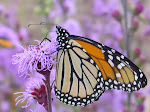
My father is planning to remove a dense patch of Aster oolentangiensis (Sky Blue Aster) that is native. He is going to replace these plants with a dense grouping of Liatris ligulistylis (Meadow Blazingstar) which is also native. He wants to attract Monarchs to his backyard and he know this plant is excellent for attracting Monarch butterflies.

My friend Duane is going to breed Hepatica acutiloba (Sharp Lobed Hepatica). This plant is a native woodland wildflower that has beautiful little white or pale blue flowers. The foliage grows in little mounds. According to Duane these plants are very popular in England and are somewhat deer resistant here in Minnesota.

18 February 2009

Seminars: for Urban Landscaping

March 4th, 2009 Wednesday 7:00pm
Parkway Garden Club
Landscaping for Birds
Speaker: Erik James Olsen, Landscape Designer, MLA
Out Back Nursery & Landscaping

Heritage Place of Roseville
563 county Road BW
Roseville, MN 55113
Free. For more information call 651-353-4284.


March 5th, 2009 Thursday 7:00pm-8:30pm
Buckthorn in Your Yard and What To Do With It
Speaker: Erik James Olsen, Landscape Designer, MLA
Out Back Nursery & Landscaping

Lyngblomsten Center Community Room
Saint Paul, MN(accessible from either Pascal St.or the main entrance off 1415 Almond Avenue. Follow the signs inside to the Community Room)
Contact: Mike MacDonald mrmacpc@yahoo.com 952-201-2845


March 16th, 2009 7:00pm
Speaker: Douglas Tallamy
Author of Bringing Nature Home: How to Sustain Wildlife in Our Gardens

John B. Davis Lecture Hall
Ruth Stricker Dayton Campus Center
Macalester College, Saint Paul MN
(corner of Grand Ave. & Snelling Avenue)
Free & Open to the public